Sabtu, 14 Maret 2015

Free Download The Courage to Act: A Memoir of a Crisis and Its Aftermath

Free Download The Courage to Act: A Memoir of a Crisis and Its Aftermath

In investing the downtime, lots of people have various means. Yet, to make the very same one, reviewing the The Courage To Act: A Memoir Of A Crisis And Its Aftermath can be done perfectly. Even it is in various time, you all can get the features as well as advantages of the book to check out. It is type of publication with the particular subject to conquer the day-to-day troubles. When you need kind of home entertainment, this publication is likewise ideal enough.

The Courage to Act: A Memoir of a Crisis and Its Aftermath

The Courage to Act: A Memoir of a Crisis and Its Aftermath


The Courage to Act: A Memoir of a Crisis and Its Aftermath


Free Download The Courage to Act: A Memoir of a Crisis and Its Aftermath

What to say when discovering your preferred book here? Many thanks God, this is a great time. Yeah, lots of people have their particular in obtaining their preferred points. For you the book enthusiasts, truth visitors, we reveal you currently one of the most motivating excellent publication from the world, The Courage To Act: A Memoir Of A Crisis And Its Aftermath A publication that is created by a really professional writer, a book that will certainly motivate the globe so much, is your own.

When you have actually had this book, it's really lovable. When you desire this book and still strategy, never mind, we provide here specifically for you. So, you will certainly not run out of The Courage To Act: A Memoir Of A Crisis And Its Aftermath when in the shop. The book that exists is in fact the soft file. As the internet library, we show you many kinds and collections of books, in soft file forms. But, it can be gotten wisely and quickly by seeing the web link supplied in every web page of this website.

As the various other book will provide, besides the new lesson it will additionally enhance the impression and motivations connected to this subject. We're actually sure that your selection to pick as analysis publication will be not incorrect. It presumes that the presence of guide will certainly enhance this world's literary collections. When lots of people search for this topic for the book reading, it will end up being the one that affect you to make brand-new inspirations.

Well, to get this book is so simple. You could save the soft data of The Courage To Act: A Memoir Of A Crisis And Its Aftermath forms in your computer system gadget, laptop, and even your gizmo. It becomes several of advantages to extract from soft documents publication. Guide is provided in the web link. Every website that we supply below will consist of a web link and there is exactly what you can find the book. Having this publication in your tool end up being several of exactly how the advanced modern technology now develops. It suggests that you will certainly not be so challenging to discover this of book. You can search the title and also any kind of subject of reading publication right here.

The Courage to Act: A Memoir of a Crisis and Its Aftermath

Review

“Revelatory…the book sheds light on many of the smaller dramas that hang over this crucial period of world economic history.” - New York Times“Undoubtedly the best account we will ever have of how government and financial institutions dealt with what has come to be known as the Great Recession.” - New York Times Book Review“A careful, detailed, and exceptionally clear justification for the Fed’s aggressive actions to avert another Great Depression and resuscitate the American economy.” - Washington Post“Bernanke’s insights are instructive about what went wrong and how to keep it from happening again.” - Los Angeles Times“A fantastic and reasonably accessible introduction to the economic thought of a former Federal Reserve Chair.” - Vox“A fascinating account of the effort to save the world from another catastrophe [like the Great Depression]…. Under Bernanke’s chairmanship, the Fed, whatever its pre-crisis mistakes, helped save the U.S. and the world from a disaster. Humanity should be grateful.” - Martin Wolf, The Financial Times

Read more

About the Author

Ben S. Bernanke served as chairman of the Federal Reserve from 2006 to 2014. He was named Time magazine's "Person of the Year" in 2009. Prior to his career in public service, he was a professor of economics at Princeton University.

Read more

Product details

Paperback: 640 pages

Publisher: W. W. Norton & Company; 1 edition (May 2, 2017)

Language: English

ISBN-10: 9780393353990

ISBN-13: 978-0393353990

ASIN: 0393353990

Product Dimensions:

5.5 x 1.3 x 8.2 inches

Shipping Weight: 1.2 pounds (View shipping rates and policies)

Average Customer Review:

4.0 out of 5 stars

231 customer reviews

Amazon Best Sellers Rank:

#103,584 in Books (See Top 100 in Books)

I think it's a VERY good book, however, I just want to get you all "heads up" that it can be somewhat textbookish. Dr. Bernanke is very very smart and he has sooo much information--and it would be a good idea to keep a dictionary handy (ha, ha)! I still haven't finished the third chapter yet bec ause a lot of this is new information to me and I'm wanting to kind of take this stuff slower and give myself more time to absorb it--it's college classroom material but I do really like it and it is really very interesting. I don't know how long it's going to take me to get through this book but I do really like it--I do think it is VERY interesting.

While this book is partly about economics, there is a substantial infusion of political science, sociology and psychology. Unlike the silo, one needs a broad, range of understanding to deal with the problems. Leadership is important, in the social sciences one can't reduce things to an equation. One needs a panel of people to arrive at effective decisions. Bernanke used his committees well, and was a major reason why we weren't in worse trouble than we were. In a way, it also sheds light on what is wanting in graduate education, where there is little attempt to foster broad ranges of understanding so that the problems can be dealt with.

If you've ever been curious what it would be like to be in the chair of the Federal Reserve during a crisis, then this is the book for you. If you can't read through hundreds of pages of dry academic writing and data analysis, then it's probably not. I consider myself a finance nerd, but struggled getting through some parts of it. The summary is that the world economy almost went off a cliff, but Helicopter Ben (he hates that name) pulled the right levers to save us all. We learned a lot about how markets and economies react to new types of stimulus during these years, and various presidents claimed credit for saving the economy when, in reality, it was the Fed who probably deserved most of the credit. I'd say it's a book most people should read, but let's be honest -- most people won't understand it, or care enough to invest the time into cracking such a thick book. I was glad I got through it though, and was even more appreciative for the job that Bernanke did while Fed Chair once I knew the behind-the-scenes details.

I bought this book because I worked for the FDIC at one point and was interested in the changes in the banking industry as a whole. I found this book to be very interesting. In terms of Bernackes knowledge but the subject, in general, can be boring depending on your interest. If your looking for the history of our banking system you will enjoy this book. Or perhaps Bernackes personal story you will probably enjoy it.

very interesting read. Sure give a sense of some of the inner working of the Fed at the time of crisis. Also shows that the decisions were not easy to make and that some actions went against natural inclinations, but had to be made because doing so could have harned the US and world economies much more. I had no idea how much help and potential help the FED played helping Europe as well. Great read for people that wondered what went on and how stressful it was not only do something, but to do the right thing.

Very thorough, in-depth account of what led up to the credit crisis, actions taken by the Fed to avert a more significant financial crisis and changes put in place to avert a recurrence. The insights on those personally involved were particularly interesting as were the interrelationships of the myriad of financial organizations - - - this got a bit too detailed but was nonetheless informative.

Ben Bernanke saved the United States and possibly the world from a devastating Second Great Depression. He along with Hank Paulson and Tim Geithner kept our economy afloat. Their pictures should be on our $20, $50 and $100 dollar bills because if they had not intervened, we would have descended into chaos, killing each other and bartering with meager food grown on our lawns.

A fairly dry, but very important book by the man at the helm of the Fed during the "great recession." Bernanke does not give us a book where shots are delivered to those who may be have been policy opponents within government, but he does manage to get his points across diplomatically. As the financial system teetered many complex and politically difficult decisions were thrust upon Washington policy makers from both the Bush and Obama Administrations. Those decisions are still debated today. Bernanke gives us his view on those decisions, and the facts on the ground that may have led, in certain instances, to decisions that were sub-optimum, or just plain wrong.Bernanke gets to some of the big decisions of the day, including the decision to let Lehman fail. The entire "bailout" of Wall Street issue is gone over, with Bernanke giving, as much as can be expected, a dispassionate analysis of why decisions were made, and what the ramifications might have been had alternative policies been adopted. Not being an economist I looked for his views on several issues that remain controversial to this day, including Lehman, the bailouts, especially the AIG bailout, the right "medicine" for an economy in a major recession.As mentioned Bernanke is diplomatic, except when it comes to the disdain he shows for the Washington political class from both Parties. The "play-acting" in the middle of a crisis, the politics first mentality of a large segment of the elected officials he had to deal with, and the flat out lack of shame or truth by these elected officials is called out by Bernanke. He defends the bailouts as necessary, but recognizes the "moral hazard" inherent in those decisions."Some of the critics were ideologues (the free market is always right) or uninformed (the economy will be just fine if a few Wall Street firms get their just deserts). Some simply railed against the unfairness of bailing out Wall Street giants but not the little guy on Main Street. Personally, I felt considerable sympathy for this last argument. (I would wince every time I saw a bumper sticker reading “Where’s my bailout?”) But it was in everyone’s interest, whether or not they realized it, to protect the economy from the consequences of a catastrophic failure of the financial system. The opponents’ most substantive argument was that, whatever the short-run benefits of bailouts, protecting firms from the consequences of their own risky behavior would lead to riskier behavior in the longer run. I certainly agreed that, in a capitalist system, the market must be allowed to discipline individuals or firms that make bad decisions. Frank Borman, the former astronaut who became CEO of Eastern Airlines (which went bankrupt), put it nicely a quarter-century earlier: “Capitalism without bankruptcy is like Christianity without hell.” But in September 2008 I was absolutely convinced that invoking moral hazard in the middle of a major financial crisis was misguided and dangerous. I am sure that Paulson and Geithner agreed. " “You have a neighbor, who smokes in bed. . . . Suppose he sets fire to his house,” I would say later in an interview. “You might say to yourself . . . ‘I’m not gonna call the fire department. Let his house burn down. It’s fine with me.’ But then, of course, what if your house is made of wood? And it’s right next door to his house? What if the whole town is made of wood?” The editorial writers of the Financial Times and the Wall Street Journal in September 2008 would, presumably, have argued for letting the fire burn. Saving the sleepy smoker would only encourage others to smoke in bed. But a much better course is to put out the fire, then punish the smoker, and, if necessary, make and enforce new rules to promote fire safety. The firefighting argument applied equally well to LehmanBernanke, Ben S. (2015-10-05). The Courage to Act: A Memoir of a Crisis and Its Aftermath (Kindle Locations 3874-3880). W. W. Norton & Company. Kindle Edition.Despite the ferocious nature of the debate, nobody, in my view, has been able to puncture this argument.His disdain for Congress comes through clearly, in several instances:Bernanke here gives a backhanded slap, but focuses on some who would prefer to let the fire rage unabated, with the desire to let the "market" handle it all, with bad players being punished, along with everyone else, for their poor actions."Tim, in particular, complained about the “Old Testament” attitude of politicians who seemed more interested in inflicting punishment than in avoiding impending disaster. We were fine with bad actors getting their just deserts, but we believed it was better to postpone the verdict on blame and guilt until the fire was out. I had also over the years seen a great deal of feigned outrage in Washington, and I didn’t feel like playing that game."That "Old Testament" attitude keeps coming through again and again, and still manifests itself every time there is a debt crisis. We heard it loud and clear during the Greek debt crisis, when the desire to 'punish" the Greeks for poor fiscal practices outweighed the practical steps needed to solve the problem.Bernanke does deal with the outrageous demands for austerity in the face of a precipitous drop in demand, and like most folks with a modicum of common sense he calls out those folks who have been proven wrong from the get go. What were they wrong about? The predictions of:Currency debasementRunaway inflationAusterity being the right "medicine" in the face of a massive recession.Although Bernanke is a Republican, appointed by a Republican President, he takes on the "know nothing" wing of the Party with gusto. His comments even drew a rebuke from Rand Paul during one of the 2015 GOP debates. What did he say?"These and a few other exceptions notwithstanding, the increasing hostility of Republicans to the Fed and to me personally troubled me, particularly since I had been appointed by a Republican president who had supported our actions during the crisis. I tried to listen carefully and accept thoughtful criticisms. But it seemed to me that the crisis had helped to radicalize large parts of the Republican Party. The late Senator Daniel Patrick Moynihan of New York once said that everyone is entitled to his own opinion but not his own facts. Some Republicans, particularly on the far right, increasingly did not draw the distinction. They blamed the crisis on the Fed and on Fannie and Freddie, with little regard for the manifest failings of the private sector, other regulators, or, most especially, of Congress itself. They condemned bailouts as giveaways of taxpayer money without considering the broader economic consequences of the collapse of systemically important firms. They saw inflation where it did not exist and, when the official data did not bear out their predictions, invoked conspiracy theories. They denied that monetary or fiscal policy could support job growth, while still working to direct federal spending to their own districts. They advocated discredited monetary systems, like the gold standard. For me, these positions pushed the party further away from the mainstream and from traditional Republican views. I still considered myself a conservative. I believed in the importance of personal autonomy and responsibility and agreed that market economies were best for generating economic growth and improving economic welfare. But I had lost patience with Republicans’ susceptibility to the know-nothing-ism of the far right. I didn’t leave the Republican Party. I felt that the party left me."Important critiques which continue to be borne out. Wrong about inflation? Claim the books are cooked. Conspiracy theories abound from those who have made error, but refuse to admit they were wrong. Easier to cite wild conspiracy theories.Bernanke also weighs in on QE1 and QE2, and takes on those who criticized the Fed for the easing. Looking back on the program gives us today a clear picture of whether the Fed made the right moves, or whether the critics were right. From my perspective Bernanke comes out with the better of the argument, as the doom predicted by the critics just failed to materialize. An open letter to the Fed, signed by a group of conservative economists in 2010, said...."The planned asset purchases risk currency debasement and inflation, and we do not think they will achieve the Fed's objective of promoting employment." Wrong again. Bernanke took them on directly:"The economic logic underlying all three—the cartoon, the letter from the congressional Republicans, and the economists’ missive—was misguided and inaccurate. In particular, there was virtually zero risk that our policies would lead to significant inflation or “currency debasement” (a loaded term for a sharp decline in the value of the dollar). That idea was linked to a perception that the Fed paid for securities by printing wheelbarrows of money. But contrary to what is sometimes said (and I said it once or twice myself, unfortunately, in oversimplified explanations), our policies did not involve printing money—neither literally, when referring to cash, nor even metaphorically, when referring to other forms of money such as checking accounts. The amount of currency in circulation is determined by how much cash people want to hold (the demand goes up around Christmas shopping time, for example) and is not affected by the Fed’s securities purchases. Instead, the Fed pays for securities by creating reserves in the banking system. In a weak economy, like the one we were experiencing, those reserves simply lie fallow and they don’t serve as “money” in the common sense of the word.""If growth in money and credit became excessive, it would eventually result in inflation, but we could avoid that by unwinding our easy-money policies at the appropriate time. And, as I had explained on many occasions, we had the tools we needed to raise rates and tighten monetary policy when needed. The fears of hyperinflation or a collapse of the dollar were consequently quite exaggerated. Market indicators of inflation expectations—including the fact that the U.S. government was able to borrow long-term at very low interest rates—showed that investors had great confidence in the Fed’s ability to keep inflation low. Our concern, if anything, was to get inflation a little higher, which was proving difficult to accomplish."Bernanke remains a conservative, but shows that the "know-nothing" wing of the GOP could have done some real damage had their policies been enacted. Bernanke took some slings and arrows from the left, and criticizes Krugman specifically for some unfair criticism. But he is a student of Keynes, and of the Great Depression, where Hooverism and the fear of inflation had such a damaging impact on our ability to recover from disaster."As new (and old) Keynesians would predict, collapsing private demand—consumer spending, home purchases, capital investment—had sent production and employment reeling. As Keynes had first suggested in the 1930s, in an economic slump public spending could replace private spending for a time. With the economy still in free fall and with short-term interest rates already near zero, the economy certainly needed fiscal help—increased government spending, tax cuts to promote private spending, or both. I had said so (albeit in my usual cautious central bank speak) during the fall, to the point that the Wall Street Journal editorialized that I had effectively endorsed Obama for president. I wasn’t endorsing a candidate, I was endorsing a program, just as I had supported President Bush’s fiscal stimulus (in the form of tax cuts) that had passed in early 2008. On February 17, less than a month after his inauguration, Obama signed a major fiscal package, the American Recovery and Reinvestment Act of 2009."Bernanke has written a fine book that is balanced, thoughtful, and will give readers, trained in economics or not, a valuable historical perspective on the actions undertaken by the Federal Reserve in response to the Great Recession. It is well worth a read.

The Courage to Act: A Memoir of a Crisis and Its Aftermath PDF
The Courage to Act: A Memoir of a Crisis and Its Aftermath EPub
The Courage to Act: A Memoir of a Crisis and Its Aftermath Doc
The Courage to Act: A Memoir of a Crisis and Its Aftermath iBooks
The Courage to Act: A Memoir of a Crisis and Its Aftermath rtf
The Courage to Act: A Memoir of a Crisis and Its Aftermath Mobipocket
The Courage to Act: A Memoir of a Crisis and Its Aftermath Kindle

The Courage to Act: A Memoir of a Crisis and Its Aftermath PDF

The Courage to Act: A Memoir of a Crisis and Its Aftermath PDF

The Courage to Act: A Memoir of a Crisis and Its Aftermath PDF

Sabtu, 21 Februari 2015

Free Download Bones of St. Peter, by John Evangelist Walsh

Free Download Bones of St. Peter, by John Evangelist Walsh

Checking out behavior will always lead individuals not to completely satisfied reading Bones Of St. Peter, By John Evangelist Walsh, an e-book, ten book, hundreds e-books, and a lot more. One that will make them feel completely satisfied is finishing reviewing this e-book Bones Of St. Peter, By John Evangelist Walsh and getting the notification of the publications, then locating the other next e-book to review. It continues an increasing number of. The time to complete reviewing a book Bones Of St. Peter, By John Evangelist Walsh will be constantly different depending on spar time to spend; one example is this Bones Of St. Peter, By John Evangelist Walsh

Bones of St. Peter, by John Evangelist Walsh

Bones of St. Peter, by John Evangelist Walsh


Bones of St. Peter, by John Evangelist Walsh


Free Download Bones of St. Peter, by John Evangelist Walsh

Locate your brand-new experience by reading Bones Of St. Peter, By John Evangelist Walsh, this book will certainly offer you finished experience concerning this life. It might not always be by yourself to get such experiences if you have not yet the money. To plan the trips as well as activities, you can read this kind of book. Yeah, this is a really impressive book that will supply several kinds of experiences.

various view. Yeah, this book conquers a new thing that will certainly not only inspire, however likewise boost lesson and experience. Having this Bones Of St. Peter, By John Evangelist Walsh, also as soft file, will prove that you have joint to be among the hundreds readers worldwide. Yeah, you're one part of the terrific individuals that like this book.

This book will certainly be always most wanted because the subject to increase is incredibly popular. Besides, it features the topic for each age and problem. All degrees of people are welcomed very well to read this publication. The breakthrough of this book is that you could not should really feel hard to understand just what this publication deal. The lesson, knowledge, experience, as well as all things that could give will need your life time to feel better.

Based upon some experiences of many individuals, it is in fact that reading this Bones Of St. Peter, By John Evangelist Walsh could help them to make much better choice and provide more encounter. If you want to be among them, let's purchase this publication Bones Of St. Peter, By John Evangelist Walsh by downloading and install guide on link download in this website. You could obtain the soft documents of this publication Bones Of St. Peter, By John Evangelist Walsh to download and also put aside in your readily available digital gadgets. Exactly what are you waiting for? Allow get this publication Bones Of St. Peter, By John Evangelist Walsh on-line and read them in at any time as well as any sort of location you will check out. It will not encumber you to bring hefty book Bones Of St. Peter, By John Evangelist Walsh inside of your bag.

Bones of St. Peter, by John Evangelist Walsh

From the Inside Flap

In the year A.D. 68, St. Peter was put to death in Rome as an enemy of the state. Roman law forbade him a proper burial and denied his friends even the right to recover his body, so few souls were able to learn his final resting place. For centuries, tradition held that to honor and preserve the mortal remains of this true Prince of the Apostles, St. Peter's Basilica had been built right over St. Peter's grave. Not, however, until 1939, did researchers, scholars, and scientists begin sustained, systematic efforts to discover the truth, an archaeological task that spanned 30 years. Carefully studying every known clue while literally unearthing others as they tunneled their way through a tangle of ancient structures beneath the magnificent high altar of St. Peter's, they slowly unraveled the secrets surrounding the burial of St. Peter. The Bones of Saint Peter is the engrossing true story of how these determined researchers finally solved the puzzle of St. Peter's burial and rescued his bodily remains from centuries of oblivion.

Read more

About the Author

John Evangelist Walsh, the author of several books, was for many years a senior editor at Reader's Digest. He has written books on topics as various as the Shroud of Turin, the Wright Brothers, and John Paul Jones.

Read more

Product details

Paperback: 256 pages

Publisher: Sophia Institute Press (July 1, 2011)

Language: English

ISBN-10: 1933184752

ISBN-13: 978-1933184753

Product Dimensions:

5.5 x 0.6 x 8.5 inches

Shipping Weight: 11.2 ounces (View shipping rates and policies)

Average Customer Review:

4.6 out of 5 stars

36 customer reviews

Amazon Best Sellers Rank:

#541,796 in Books (See Top 100 in Books)

Walsh's book on this subject is arguably the best non-scholarly work available, better even than Professor Guarducci's own book (published in English translation in 1960 as "The Tomb of St Peter"). Walsh did his homework, writes clearly, provides helpful diagrams and interesting photographs. There are also references and bibliography which enable a more curious reader to pursue the subject further. Readers who have been conducted through the "scavi" beneath St Peter's will find this a wonderful clarification of what they saw, those who plan to visit them will find it an excellent preparation. But, a very strong warning. The electronic text is horribly riddled with typographical errors, at least one or two per page. Some of them are easy to decipher, and almost funny, e.g., "Pope Pius XH's admitted personal fascination" or "Imagine an immense square shaft ... twenty 'jam feet on a side." Others so badly mangle words and numbers that it is impossible to decipher the original, sometimes important, word or date. That readers should have to engage in such an exercise does no credit to the publishers, and if it is at first an annoyance, it soon becomes distracting and frustrating. If you really want to read the book, you'll be happier with a bound copy.

I find this book very interesting and well written. There are a couple of other books on this topic but this is the best of the lot. The first three times I read the book, it was in print form. I was excited when I saw that it is in electronic format.I do have one complaint, not about the content of the book, but you need to get a new typist. The manuscript is full of errors. I tried to flag them but there are just too many of all kinds.

I recommend this book because of the history it tells of the actual construction of the Basilica in Rome. And the habits and secrets of the early Christians. Intriguing story with a few bits of humor thrown in. Good drawings and photographs for illustrations.

This book sucked me in, and I couldn't put it down.It reads like a mystery, and a historical lesson mixed with archaeology, science and Christ.I highly recommend this read, it's like a real life Indiana jones mystery.Highly recommended

This is the book that all Catholic should read. It is so moving and so interested I could not put it down

This book explained so much and dispelled the controversy surrounding the finding of St Peter's burial site and tomb. Very interesting and factual account.

Interesting and fact-filled!

Extremely detailed account (almost tedious!) of the process of finding the bones of St Peter. I only wish this were made into a documentary video.

Bones of St. Peter, by John Evangelist Walsh PDF
Bones of St. Peter, by John Evangelist Walsh EPub
Bones of St. Peter, by John Evangelist Walsh Doc
Bones of St. Peter, by John Evangelist Walsh iBooks
Bones of St. Peter, by John Evangelist Walsh rtf
Bones of St. Peter, by John Evangelist Walsh Mobipocket
Bones of St. Peter, by John Evangelist Walsh Kindle

Bones of St. Peter, by John Evangelist Walsh PDF

Bones of St. Peter, by John Evangelist Walsh PDF

Bones of St. Peter, by John Evangelist Walsh PDF

Kamis, 12 Februari 2015

Ebook Free Veterinary Psychopharmacology

Ebook Free Veterinary Psychopharmacology

You can conserve the soft data of this e-book Veterinary Psychopharmacology It will certainly depend upon your leisure and also activities to open up as well as read this publication Veterinary Psychopharmacology soft file. So, you may not be worried to bring this publication Veterinary Psychopharmacology anywhere you go. Simply include this sot file to your gadget or computer disk to allow you review every single time as well as almost everywhere you have time.

Veterinary Psychopharmacology

Veterinary Psychopharmacology


Veterinary Psychopharmacology


Ebook Free Veterinary Psychopharmacology

Residing in this brand-new era will expect you to constantly compete with others. One of the modal to contend is the thought, mind, and knowledge included experience that on by a person. To take care of this problem, everybody should have better knowledge, minds, and also believed. It is to feel taken on the others, of course in doing the kindness and this life to be much better. One of the ways that can be done is by reading.

Veterinary Psychopharmacology tends to be referred book, not just by this website. Many people have actually confirmed that it actually works to them. How's about you? As long as the topic and problem that you ace is related to what this book contains, it will actually help you. Fixing the troubles can be considered via lots of resources. Paying attention to the other advice is very important. Yet, obtaining the truths and also inspirations from the written resources as well as the expert will certainly be actually completed.

Are you curious about mainly books Veterinary Psychopharmacology If you are still perplexed on which one of the book Veterinary Psychopharmacology that should be purchased, it is your time to not this site to try to find. Today, you will certainly need this Veterinary Psychopharmacology as one of the most referred book and many needed publication as sources, in other time, you could appreciate for some other books. It will certainly rely on your eager needs. But, we always suggest that books Veterinary Psychopharmacology can be a fantastic problem for your life.

After establishing the communication of you in order to prefer such book, you can straight discover and get to download and also make handle the Veterinary Psychopharmacology The resource can be obtained from link to give right here. As one of the greatest book web site worldwide, we constantly give the very best points. Obviously, the book that we offer constantly the book that provides unbelievable point to discover and obtain. If you think that you really require this publication currently, get it as soon as possible.

Veterinary Psychopharmacology

From the Back Cover

Every day veterinarians in practice are asked to treat pets exhibiting problem behaviors. In the last several years pharmacologic treatments of behavior have made significant advances and can serve as a critical part of therapy. Veterinary Pscyhopharmacology is a complete source of current knowledge on the subject of pharmacologic behavior modification that veterinarians can turn to for the answers they need. Classification of disorders is eschewed in favor of in-depth explanations of pharmacologic options in inducing behavior changes. Special emphasis is given to explaining the underlying mechanism of pharmacologic agents used in therapy; thus, veterinarians will know not only which drugs to prescribe but why they should be prescribed and how they work. Veterinary behaviorists, their students and residents, veterinary practitioners of all levels, and veterinary students will find this book invaluable in providing information about their patients' behavior problems and the psychoactive medications that might help them.

Read more

About the Author

Sharon L. Crowell-Davis DVM, PhD, was one of the founding Diplomats of the American College of Veterinary Behaviorists. She has 27 years experience in the diagnosis and treatment of behavior problems in domestic and zoo animals and is currently a Professor at the University of Georgia. Thomas Murray, BS, PhD, is Head of the Department of Physiology and Pharmacology, where he is also a Distinguished Research Professor with 24 years experience in psychopharmacology

Read more

Product details

Hardcover: 270 pages

Publisher: Wiley-Blackwell; 1 edition (December 19, 2005)

Language: English

ISBN-10: 0813808294

ISBN-13: 978-0813808291

Product Dimensions:

7.3 x 0.7 x 10.3 inches

Shipping Weight: 1.5 pounds

Average Customer Review:

5.0 out of 5 stars

1 customer review

Amazon Best Sellers Rank:

#1,116,612 in Books (See Top 100 in Books)

An essential monograph for all pharmacologists and veterinarians who work with psychotropic drugs. I cannot recommend this book too highly.clear, comprehensive, superb!

Veterinary Psychopharmacology PDF
Veterinary Psychopharmacology EPub
Veterinary Psychopharmacology Doc
Veterinary Psychopharmacology iBooks
Veterinary Psychopharmacology rtf
Veterinary Psychopharmacology Mobipocket
Veterinary Psychopharmacology Kindle

Veterinary Psychopharmacology PDF

Veterinary Psychopharmacology PDF

Veterinary Psychopharmacology PDF

Rabu, 04 Februari 2015

Free Ebook Autonomy: The Quest to Build the Driverless Car—And How It Will Reshape Our World, by Lawrence D Burns

Free Ebook Autonomy: The Quest to Build the Driverless Car—And How It Will Reshape Our World, by Lawrence D Burns

Introducing this publication in soft data kind is really fun. Yeah, this publication will exist in different method, as exactly what you want to get currently. Even this is a soft data; you can take pleasure in exactly how guide will influence you. By reading it, you could acquire not just the inspiring publication yet likewise the depictive most recent book collection. Well, just what is guide? Autonomy: The Quest To Build The Driverless Car—And How It Will Reshape Our World, By Lawrence D Burns, as one of the most popular books worldwide. So, you should read it.

Autonomy: The Quest to Build the Driverless Car—And How It Will Reshape Our World, by Lawrence D Burns

Autonomy: The Quest to Build the Driverless Car—And How It Will Reshape Our World, by Lawrence D Burns


Autonomy: The Quest to Build the Driverless Car—And How It Will Reshape Our World, by Lawrence D Burns


Free Ebook Autonomy: The Quest to Build the Driverless Car—And How It Will Reshape Our World, by Lawrence D Burns

Announcing brand-new item as a publication is very impressive for us. We could use a new better thing again and again. When many people aim to seek for the new coming publications, we are below as the supplier. As a good supplier, we constantly supply all collections of books, from several resources. Thus, the books from several countries are readily available and appropriate right here. This web site is really a wonderful book provider, even in the soft documents.

Really feeling tired after doing some activities in vacations will certainly order you to have relaxation for some minutes. It will certainly also assist you to fulfill the charge time. When you could appreciate your time for relaxation as well as forget the view around you, it is the very best time to have additionally reading. Yeah, checking out publication comes to be a very perfect suggestion to do today. But, do are you feel strange not to bring specific publication?

And currently, after recognizing the writer, you can additionally get rid of that the book is suggested to check out basically form the reasons. Today book entitled Autonomy: The Quest To Build The Driverless Car—And How It Will Reshape Our World, By Lawrence D Burns is done to handle you in obtaining even more functions of the lifestyle. You might not should make different means of relevant resources to occur. When you have the different ways to review something, you can attempt to pick the soft data systems of this book.

When you really feel that you're interested enough in this book, you can get it by clicking the connect to link directly to guide. Autonomy: The Quest To Build The Driverless Car—And How It Will Reshape Our World, By Lawrence D Burns is supplied in the soft data kinds, so you can conserve as well as read it in various gadget. We indicate that it appropriates and readily available to read every time you desire. Also it's in the train or every where you are, you can make use of the leisure for analysis.

Autonomy: The Quest to Build the Driverless Car—And How It Will Reshape Our World, by Lawrence D Burns

Review

“A combination of memoir and visionary manifesto[, Burns’] front-row seat at the project that popularized autonomous cars informs some of the most lively parts of Autonomy.” (Wall Street Journal)“The drama, ambition and genius characterizing the race to develop self-driving cars zoom into sharper focus in Autonomy.” (USA Today)“Anyone interested in learning about how we got to where we are today should definitely grab a copy.” (Forbes)“Fascinating . . . the book really shines . . .  in illustrating the complex dynamic between Thrun, Urmson, and Levandowski, the three critical figures in making robot cars a reality. . . [a]rip-roaring story.” (IEEE Spectrum)“With his access to so many players including Google founders Larry Page and Sergei Brin, Burns does a masterful job weaving the various strands of his story together.  And a juicy story it is, filled with an insider’s first hand experiences and observations. ” (Doron Levin, Forbes) “A provocative look at a rising industry that may soon change the nature of the world’s too-busy roadways.” (Kirkus Reviews)“A compelling read—well-written and packed with insights that could only come from a top-level technology leader who personally knows many of the key players.” (Autonomous Vehicle Engineering  )“The coming transformation in mobility will impact numerous industries, from automobile manufacturing to car rentals to logistics. Autonomy chronicles the remarkable story of the innovators leading that change.” (Clay Christensen, author of The Innovator’s Dilemma )“A fascinating hybrid: Part freewheeling history of the rise of the modern autonomous vehicle, part intimate memoir from an insider who was on the front lines for much of that history, Autonomy will more than bring readers up to speed on one of today’s most closely watched technologies.” (Brian Merchant, author of The One Device: The Secret History of the iPhone)“This is the story of one of those quests will change how we live. Burns was one of the first people to understand the massive implications of driverless cars. His  involvement with the players inventing and commercializing this technology makes this book an authoritative preview of the autonomous age.” (John Casesa, Former Group Vice President, Global Strategy, Ford Motor Company)

Read more

From the Back Cover

We stand on the brink of a technological revolution. In the near future, most of us will not own automobiles, but will travel instead in driverless electric vehicles summoned at the touch of an app. We will be liberated from driving, so that the time we spend in cars can be put to more productive use. We will prevent more than 90 percent of car crashes, provide freedom of mobility to the elderly and disabled and decrease our dependence on fossil fuels.Autonomy tells the story of the maverick engineers and computer experts who triggered the revolution. Lawrence D. Burns—longtime adviser to the Google self-driving car project (now Waymo) and former corporate vice president of research, development and planning at General Motors—provides the perfectly timed history of how we arrived at this point, in a character-driven and vivid account of the unlikely thinkers who accomplished what billion-dollar automakers never dared.Beginning at a 2004 off-road robot race across the Mojave Desert with a million-dollar purse and continuing up to the current stampede to develop driverless technology, Autonomy is a page-turning chronicle of the past, a diagnosis of the present, and a prediction of the future—the ultimate guide to understanding the driverless car and to navigating the revolution it has sparked.

Read more

See all Editorial Reviews

Product details

Hardcover: 368 pages

Publisher: Ecco (August 28, 2018)

Language: English

ISBN-10: 0062661124

ISBN-13: 978-0062661128

Product Dimensions:

6 x 1.2 x 9 inches

Shipping Weight: 1.3 pounds (View shipping rates and policies)

Average Customer Review:

4.2 out of 5 stars

38 customer reviews

Amazon Best Sellers Rank:

#52,372 in Books (See Top 100 in Books)

I would highly recommend this book to both students and adults. The retelling of the DARPA Grand Challenges seriously made me regret not choosing a career in engineering. And the explanation of how the autonomous vehicle has evolved over time was gripping, not only because of the breadth of topics covered (e.g., engineering, mathematics, public policy, business, etc.), but also because of all the known and unknown people you learn about. An exciting and fascinating tale of the past, present and future of autonomous vehicles.

Burns is a former GM exec who for years engaged in the thankless task of reforming the company from with, to steer it toward a greener future. He scored some successes by securing GM sponsorship of prestigious teams in autonomous driving competitions in the early 2000’s, but ultimately inertia of the old guard combined with economic downturns and bankruptcy convinced him that he could effect more change by being outside of GM than staying within.This is a riveting insider tale of the first decades in the quest for developing and marketing autonomous vehicles. Featuring enough technical information to give geeks something to enjoy while not burying the reader with arcane engineering detail, this work strikes the perfect mix. The chapters on the first DARPA autonomous vehicle challenges are particularly compelling and are told in a vivid, page-turning manner.The author retells the many personal conflicts that plagued the business in the later years, some of which impacted him, but by and large he manages to put his personal biases aside and tell the story in an informative and reasonable manner. However, despite his intentions, the reader can still detect an anti-Uber tilt, although he is open about his allegiances and interests. Another improvement could have been to address some of the autonomous vehicle activity outside of North America. While North America in general and the Detroit-Silicon Valley rivalry (which eventually, as he points out, became a collaboration) in particular were a clear driving force in the development of the autonomous car, there could have been a few more comments on what was happening outside the continent. Ethical issues, too, could have benefited from a little more coverage.But these are quibbles. Written in a very readable style by a man with deep knowledge of the car business, this is an excellent introduction to the field and a must-read for all who want to know how we got here and where we’re going. It will make you an optimist.

I can’t get this subject matter of this book out of my mind.Lawrence Burns starts with a concise, researched summary of the current situation with all of us guzzling fuel to drive a heavy, larger than needed car from one parking spot to another on our occasional trips in our mostly idle personal autos.I’m in Oakland CA and until reading this book saw no hope for any future solution to Bay area traffic. But Burns lays out the dramatic reduction in “cars” needed if we move from personally owned autos to fleets of driverless cars readily responding to our calls for rides to whatever destinations we have.Any politician or other public official facing traffic issues should, after reading this book, want their jurisdiction at the head of the line for those city managers thoughtful enough to lead their municipalities in participation in testing these vehicles.Yes, very sadly there will be tragedies ahead with these vehicles – we’ve already seen some and they too are well documented in this book. But these vehicles have the potential and the promise of dramatic future reduction in accidents. Burns strongly makes that case.I had a first-hand seat to the advent of the digital camera era and as a result to Kodak losing its enormous businesses in film, in paper, in chemicals, and in picture developing/printing. The automobile and energy production and maintenance businesses face the same fate at the same pace that Kodak faced. If you’re in any business dependent on automobiles – from manufacturing, to parts production, to sales, to servicing, to gasoline production/sales, to parking, to insurance – this book will lead you through rethinking the future of your businesses. Don’t believe it? Don’t think it will happen in the “near” future? Read this book and it’ll make you rethink your futures.My hope is that this happens before my own car needs replacement, as I’m hopeful it will be the last car I ever own.

I just finished reading this outstanding new book (released last week) that I HIGHLY RECOMMEND for anyone who is interested in learning about the rapid evolution, over the last 10 years, of the autonomous self driving car industry from an insider who has been totally engaged from (and before) the beginningThis excerpt from the overview describes it very well:"Autonomy is the story of the maverick engineers and computer nerds who are creating the revolution. Longtime advisor to the Google Self-Driving Car team and former GM research and development chief Lawrence D. Burns provides the perfectly-timed history of how we arrived at this point, in a character-driven and heavily reported account of the unlikely thinkers who accomplished what billion-dollar automakers never dared."This is DEFINITELY a 5 star read in my book!!!

The author repeats himself frequently, especially regarding how visionary he is. The book largely covers the past development of autonomous vehicles which is interesting although wordy. There's a few areas covering the economics that may make mobile services succeed. However, autonomous vehicles always seem two years away. The author doesn't cover why it's taking so long and what the development issues are today.

Autonomy: The Quest to Build the Driverless Car—And How It Will Reshape Our World, by Lawrence D Burns PDF
Autonomy: The Quest to Build the Driverless Car—And How It Will Reshape Our World, by Lawrence D Burns EPub
Autonomy: The Quest to Build the Driverless Car—And How It Will Reshape Our World, by Lawrence D Burns Doc
Autonomy: The Quest to Build the Driverless Car—And How It Will Reshape Our World, by Lawrence D Burns iBooks
Autonomy: The Quest to Build the Driverless Car—And How It Will Reshape Our World, by Lawrence D Burns rtf
Autonomy: The Quest to Build the Driverless Car—And How It Will Reshape Our World, by Lawrence D Burns Mobipocket
Autonomy: The Quest to Build the Driverless Car—And How It Will Reshape Our World, by Lawrence D Burns Kindle

Autonomy: The Quest to Build the Driverless Car—And How It Will Reshape Our World, by Lawrence D Burns PDF

Autonomy: The Quest to Build the Driverless Car—And How It Will Reshape Our World, by Lawrence D Burns PDF

Autonomy: The Quest to Build the Driverless Car—And How It Will Reshape Our World, by Lawrence D Burns PDF

Sabtu, 17 Januari 2015

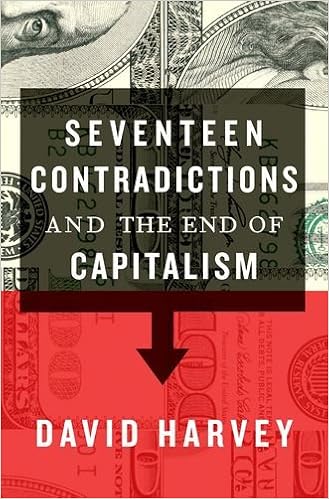
PDF Download Seventeen Contradictions and the End of Capitalism

PDF Download Seventeen Contradictions and the End of Capitalism

If you really feel that this book is seriously matched to what you need, just discover it in far better problem. You could see that the presented book in soft data systems are proffered making better methods to read a publication. Now, it verifies that checking out publication is not sort of hard means any longer. When you have got the Seventeen Contradictions And The End Of Capitalism, you have the ideal selection as well as option. So, why don't you make it currently and right here?

Seventeen Contradictions and the End of Capitalism

Seventeen Contradictions and the End of Capitalism


Seventeen Contradictions and the End of Capitalism


PDF Download Seventeen Contradictions and the End of Capitalism

Do not you believe that you require new way to lead your room time much better? Keep onward with great routine. Reviewing is just one of the very best recommendations for you. Yet, picking the best analysis book is likewise important. It will certainly affect just how you will get the advancements. It will show you the high quality of guide that you read. If you need the sort of publication with top quality, you could select Seventeen Contradictions And The End Of Capitalism Why should be this publication? Come on follow us to know why and ways to get it.

We understand that everybody will certainly require various book to review. The demands will depend on exactly how they deal with. When they need the sources from the various other country, we will certainly not let them feel so challenging. We provide guides from abroad conveniently based on the soft documents offered in web link checklists. All publications that we offer remain in easy methods to link as well as obtain, as the Seventeen Contradictions And The End Of Capitalism in soft file in this internet site.

Concerning this book, everybody knows that it's really intriguing book. You could have sought for this publication in many shops. Have you got it? When you are run out of this book to purchase, you could get it here. You recognize, obtaining Seventeen Contradictions And The End Of Capitalism in this site will be much easier. No have to choose purchasing in publication shops, walking from one shop to others, this is the internet that has lists al book collections in the world, primarily. The web links are used for each and every book.

But, this book is actually various. Feeling anxious is common, yet except this publication. Seventeen Contradictions And The End Of Capitalism is specifically written for all societies. So, it will be very easy as well as offered to be recognized by all individuals. Now, you need just prepare little time to get and download and install the soft file of this book. Yeah, guide that we offer in this on-line website is all in soft data styles. So, you will not really feel complicated to bring huge publication almost everywhere.

Seventeen Contradictions and the End of Capitalism

Review

"The book is a refreshing attempt to innovate Marxist theory, to move beyond the tired dogmatisms and deadend scholasticism that have plagued it for too long and construct a richer, more open theoretical approach...Likewise, it is an important book for activists seeking to craft a politics that, while moving beyond the limitations of spontaneity and structurelessness, can finally transcend the old question of l"reform or revolution," and test the possibilities for reform and revolution through the practical reconstitution of a socialist political alternative for the 21st century left." --Stephen Maher, lScience & Society

Read more

About the Author

David Harvey is Distinguished Professor of Anthropology at the Graduate Center of the City University of New York. He is among the top twenty most cited authors in the humanities and is the world's most cited academic geographer. His books include The Limits to Capital, Social Justice and the City, and The Condition of Postmodernity, among many others.

Read more

Product details

Paperback: 352 pages

Publisher: Oxford University Press; Reprint edition (April 1, 2015)

Language: English

ISBN-10: 0190230851

ISBN-13: 978-0190230852

Product Dimensions:

8.4 x 1.1 x 5.4 inches

Shipping Weight: 13.6 ounces (View shipping rates and policies)

Average Customer Review:

4.4 out of 5 stars

53 customer reviews

Amazon Best Sellers Rank:

#389,488 in Books (See Top 100 in Books)

This is a fundamental book to understand the many contradictions of the capitalist system. Prof. Harvey goes to the heart of the matter when he shows that capitalismo cannot provides for the future of humanity since it is based on the exploitation of human labor. In reality, modern capitalism is a remake of older exploitation systems such as slavery, using technology and science to hide the fact that it extracts labor from most people in the world without giving the minimum return other than subsistence (this when a job is available). I recommend reading each one of the seventeen facets of the problem as exposed so brilliantly in this book.

This book is essential reading for anyone who wants to understand that Marxism, Communist revolutionary theory, practice and analysis are still alive in the US and the "modern" world -- contrary to all the celebratory op ed pieces from the Wall Street news services and American pundits. To understand what is going wrong with the US, no matter how much money the government throws away each year on a combination of ill conceived, aggressive, war based foreign policies and failed hand out, paternalistic, even parasitic and costly medical and public "welfare:" programs domestically -- one must understand the inherent contradictions that exist inherently in the capitalist political economic system and the culture it fosters or, rather, festers in a futile attempt to cover up the blemishes, wrinkles and sores like some bad make-up company late night TV advertising campaign. The emporer has no clothes, new or old, and the contradictions are well identified, described, and analyzed by Harvey in this updated critique of monopoly imperialist capitalism, the modern update of Lenin's Imperialism the Highest Stage of Capitalism, and a well done and timely update to Das Kapital in the 21st Century and new Neolliberal assault against humanity and plans to destroy Marxist practice and organization, and, especially the socialist governments with Communist Party leadership in the world today -- like was true in various ways in Cuba and the embargos, the new Cold War with Russia, the Obama "Pivot to Asia" which is really the "Return to Asia of the Victim of the Vietnam War Criminal US Government and War Machine", the interference in EU affairs and rebuilding a nuclear NATO,. the invasions in the Middle East and total destruction of Iraq, Libya, Yemen and now Syria all against International Law, etc. All of that arises out of these contradictions, and the American Capitalist led onslaught under the banners of "Free Trade," "Democracy through regime change," "Globalization," "Open Borders," and "One World Economic Order under the US as Super Power" -- focused and drilled down on, one contradiction at a time, by Harvey, as the banner carrier of Marxism in the US today, and the foster child of Lenin and the contemporary embodiment of Mao and his On Contradiction, all the revolutionary prodigies of Marx and Engels. Right on, Comrade David.

It is a very informative and interesting book. If you wish to know the problems facing the world today, it is an excellent choice. However, it is a little lacking in recommendations and the title suggesting the end of capitalism in general may be exagerated. It does, however, point out a relatively recent development in economics and politics called "the claiming of the commons". Other books such as "The end of money and the future of civilization" by Thomas H. Greco, Jr. can provide further enlightement on the latter.

'The Seventeen Contradictions and the End of Capitalism' has to be one of the most prophetic books since 'The Limits to Growth.' Employing a Marxist perspective, the author, Dr. David Harvey looks at capitalism systematically in an attempt to discover how crises such as the recession of 2008 originate. He goes on to expose the contradictions at the heart of capitalism. In doing so he has discovered that instead of facing its crises head on, capitalism moves them around.Summarizing, Dr. Harvey breaks the 17 contradictions down into 3 categories which include seven foundation contradictions, seven moving contradictions, and three dangerous contradictions. Even though he categorizes the contradictions in order to analyze them better, he cautions us readers to view the contradictions as interlinked with each other, illustrating how an analysis of capitalism needs to employ a systematic perspective.Beginning with an analysis of the ingredients that led to the recession, Dr. Harvey discourses on use value, exchange value, their impact on housing, and how speculation in the exchange value of housing led to a crises that almost rocked capitalism at its foundations. Continuing with an analysis of the other foundation contradictions he discusses capital and labor, private property, and production.His category of 'moving contradictions' include social trends, cycles, and geographic moves. For example, if a company moves its factory to Mexico in order to capitalize on cheaper labor this is considered a moving contradiction. Technological changes, automation and its displacement of labor, changes in wealth disparity, and uneven geographic development were also considered to be 'moving contradictions.'The three dangerous contradictions included endless compound growth, the commodification of nature, and the alienation of labor. Compound growth could be the most fatal for capitalism. Compound growth was illustrated by analogy with an ancient tale from India. In the tale a king asks the inventor of chess what he would like as a prize. The inventor answered that he merely wanted one grain of rice to be doubled on each square of the chessboard. The king agreed to grant the inventor his wish until he found out that by the 41st square all the rice in the world would not be enough. Mr. Harvey continues by stating, “Without expansion there can be no capital. A zero-growth capitalist economy is a logical and exclusionary contradiction. It simply cannot exist.” Yet in a world of finite resources capital cannot continue to grow at its current rate.Dr. Harvey leaves his readers with a sense of dis-ease because he makes a strong case for the possibility of capital imploding upon itself. Capital works most effectively when money and resources circulate. When wealth becomes concentrated as trends show it is now doing, the demand for goods fall. Even though productivity may continue or increase, without demand the goods that are produced end up not being sold. Capitalism has so far been able to circumvent this potential problem by finding new markets or extending credit.Dr. Harvey's solutions are radical and include the restoration of the commons. He doesn't go so far as to prophesize the end of capitalism. Yet, if capitalism is to survive the future the dystopian society that he predicts would result is truly horrific to the imagination. I found this quote particularly pertinent in conjunction with this theme, 'the issue is not, therefore, that capitalism cannot survive its contradictions but that the cost of doing so becomes unnacceptable to the mass of the population,' delineating two clear choices, a future like that of the movie 'Elysium' or an alternate 'post capitalist' future that has the interests of the mass of humanity at heart.Even though I am not an economist, I found Mr. Harvey's analysis revealing and insightful. There were points in my reading where I felt he lost his objectivity in his need for eloquence. However, I felt he made a very compelling case. If his argument is valid, the implications are both disturbing and disillusioning; disturbing because he paints a picture of a future in which the mass of humanity is alienated from themselves and nature if we continue taking the direction we are headed. Disillusioning because we may be unwilling to make the changes necessary for an alternative future. Anyone concerned with where society is headed needs to read this book. It makes a compelling case for change and re-assessing the journey that we are on.

A well presented, reasonable critique of capitalism. Whatever your dogma regarding western economics, David Harvey knocks that kool-aid right out of your hands! The first section is a must-read for anyone seeking an honest evaluation of capitalism - which is built on a series of dualities. Harvey calls them contradictions, and in a strict sense that is true, but he really refers to the positive and negative aspects of things like money. His explanation of the difference between use value and market value is especially good.

Seventeen Contradictions and the End of Capitalism PDF
Seventeen Contradictions and the End of Capitalism EPub
Seventeen Contradictions and the End of Capitalism Doc
Seventeen Contradictions and the End of Capitalism iBooks
Seventeen Contradictions and the End of Capitalism rtf
Seventeen Contradictions and the End of Capitalism Mobipocket
Seventeen Contradictions and the End of Capitalism Kindle

Seventeen Contradictions and the End of Capitalism PDF

Seventeen Contradictions and the End of Capitalism PDF

Seventeen Contradictions and the End of Capitalism PDF

Selasa, 09 Desember 2014

Free Ebook Northern Winework: Growing Grapes and Making Wine in Cold Climates

Free Ebook Northern Winework: Growing Grapes and Making Wine in Cold Climates

Numerous duties in this recent era require guide not just from the most up to date book, yet likewise from the old book collections. Why not? We serve you all collections from the earliest to the newest books worldwide collections. So, it is extremely finished. When you feel that the book that you have is truly book that you intend to read currently, it's so pleasured. However, we actually recommend you to read Northern Winework: Growing Grapes And Making Wine In Cold Climates for your own necessity.

Northern Winework: Growing Grapes and Making Wine in Cold Climates

Northern Winework: Growing Grapes and Making Wine in Cold Climates


Northern Winework: Growing Grapes and Making Wine in Cold Climates


Free Ebook Northern Winework: Growing Grapes and Making Wine in Cold Climates

Collection and book store are two vital places to get the books to review. However, in modern era, it will certainly not only evoke both places. Several websites are currently readily available for the on-line collection. As right here, discovering the numerous publications titles from within and outside of this nation is easy. You might not just want to take the book yet additionally casual education. As revealed, collection can be a casual education and learning system to expand the expertise, from any type of sources.

The books that exist come from numerous collections on the planet. It indicates that you will certainly find the hundreds books from numerous writers as well as authors from the globe. We realize that such individuals will need the book from other country. If they need to spend much money to order as well as await sometimes, you can obtain various means below. Right here, you could conveniently get the easiest way to attach to the book as Northern Winework: Growing Grapes And Making Wine In Cold Climates straight.

You could not need to be uncertainty regarding this Northern Winework: Growing Grapes And Making Wine In Cold Climates It is uncomplicated way to get this publication Northern Winework: Growing Grapes And Making Wine In Cold Climates You can just go to the set with the web link that we provide. Here, you can purchase the book Northern Winework: Growing Grapes And Making Wine In Cold Climates by online. By downloading Northern Winework: Growing Grapes And Making Wine In Cold Climates, you could discover the soft documents of this publication. This is the exact time for you to begin reading. Also this is not published book Northern Winework: Growing Grapes And Making Wine In Cold Climates; it will specifically provide more advantages. Why? You might not bring the printed book Northern Winework: Growing Grapes And Making Wine In Cold Climates or only stack the book in your house or the office.

To obtain Northern Winework: Growing Grapes And Making Wine In Cold Climates, no complicated system and no effort to obtain this book exist. Link your computer, laptop, or gizmo with the net. Now, you could click the web link and also obtain download and install with the terms that remain in the link. After getting it and also conserving the soft data of Northern Winework: Growing Grapes And Making Wine In Cold Climates, you could begin and take care of where when you will read it. This is a really outstanding activity to be practice and also a pastime.

Northern Winework: Growing Grapes and Making Wine in Cold Climates

About the Author

Tom Plocher is a leading grape breeder. Bob Parke is a wine enthusiast.

Read more

Product details

Paperback: 214 pages

Publisher: Board and Bench Publishing; 2 edition (February 1, 2009)

Language: English

ISBN-10: 1934259187

ISBN-13: 978-1934259184

Product Dimensions:

8.5 x 0.5 x 11 inches

Shipping Weight: 1.3 pounds

Average Customer Review:

4.6 out of 5 stars

7 customer reviews

Amazon Best Sellers Rank:

#2,049,617 in Books (See Top 100 in Books)

Great information! We will see how this goes in Alaska.

I would have liked more emphasis on the unique problems of handling cold climate grape varieties in the wine making process.

Very good reference book for experienced grape growers in northern climate all over world..

Very helpful to a beginning northern Michigan vineyard owner.

As complete a guide as possible on a very knew grape growing. Has much information on a little known topic.

The second edition is a huge step forward. There has been a tremendous amount of progress since the first edition (2002) in wine grape growing in the colder regions of the United States and into Canada. Tasting Minnesota wines I've seen real progress even in the last couple of years. There really can be good wines, not just novelty wines, produced in the colder climates of the upper Midwest, New England, and into Ontario Province.The winemaking has also changed and improved, though not as dramatically as the viticulture. There's some information of yeasts and methods particular to colder climates.Overall an excellent book, with a major (2009) update. Recommended for anyone interested in wines from colder climates than the Yakima Valley.

I enjoyed reading this book. It is full of information on how to deal with those cold winters. Although I'm located a bit further south, this book gives excellent details for the varieties showcased. Great details for winemaking of each of the specific varieties, and very informative. They provide an honest evaluation of the wines, to keep your expections realistic. This will come in very handy when deciding to blend or make a varietal. With dedicated growers like Tom and Bob, everyone can benifit from thier work for years to come. Keep it up!

Northern Winework: Growing Grapes and Making Wine in Cold Climates PDF
Northern Winework: Growing Grapes and Making Wine in Cold Climates EPub
Northern Winework: Growing Grapes and Making Wine in Cold Climates Doc
Northern Winework: Growing Grapes and Making Wine in Cold Climates iBooks
Northern Winework: Growing Grapes and Making Wine in Cold Climates rtf
Northern Winework: Growing Grapes and Making Wine in Cold Climates Mobipocket
Northern Winework: Growing Grapes and Making Wine in Cold Climates Kindle

Northern Winework: Growing Grapes and Making Wine in Cold Climates PDF

Northern Winework: Growing Grapes and Making Wine in Cold Climates PDF

Northern Winework: Growing Grapes and Making Wine in Cold Climates PDF

Jumat, 05 Desember 2014

PDF Download Devil in a Blue Dress: An Easy Rawlins Mystery

PDF Download Devil in a Blue Dress: An Easy Rawlins Mystery

The perks to consider checking out guides Devil In A Blue Dress: An Easy Rawlins Mystery are pertaining to enhance your life top quality. The life quality will not simply regarding how significantly expertise you will certainly acquire. Also you read the fun or amusing books, it will certainly help you to have boosting life quality. Really feeling enjoyable will lead you to do something flawlessly. Furthermore, the book Devil In A Blue Dress: An Easy Rawlins Mystery will offer you the lesson to take as an excellent factor to do something. You could not be useless when reading this e-book Devil In A Blue Dress: An Easy Rawlins Mystery

Devil in a Blue Dress: An Easy Rawlins Mystery

Devil in a Blue Dress: An Easy Rawlins Mystery


Devil in a Blue Dress: An Easy Rawlins Mystery


PDF Download Devil in a Blue Dress: An Easy Rawlins Mystery

Invest your couple of moment to check out a book even only few web pages. Reviewing book is not obligation as well as force for everyone. When you don't want to review, you can obtain punishment from the author. Check out a publication comes to be a selection of your different attributes. Many individuals with analysis behavior will certainly always be satisfying to review, or as a matter of fact. Somehow, this Devil In A Blue Dress: An Easy Rawlins Mystery tends to be the representative book in this internet site.

Exactly what do you think of Devil In A Blue Dress: An Easy Rawlins Mystery as one that we offer currently? This is a terrific publication that belongs to the updated recently book to publish. When great deals of people attempt to get this publication problem, you can be easier to join with us and seek for it for much easier ways. And also this is you time to notify your pal about this great information. Delivering the good info about this publication to others will certainly relieve after that not to get difficulty anymore, in addition for far better details.

Besides, this book is likewise composed by one of the most popular writer in the country. So, when you appreciate the author a lot, it will certainly complete the collections of the compositions. However, when you are not very fan of the author, you could still love Devil In A Blue Dress: An Easy Rawlins Mystery since you will understand just how the author informs the material to the readers and also society. You can make manage this book as one of referred information to earn you really feel admired a lot with this publication.

When you have actually read it extra web pages, you will certainly understand increasingly more once again. In addition when you have reviewed all completed. That's your time to always remember and do what the lesson and also experience of this book provided to you. By this condition, you should recognize that every book ahs various means to present the impression to any kind of visitors. But they will certainly be and should be. This is what the DDD constantly provides you lesson regarding it.

Devil in a Blue Dress: An Easy Rawlins Mystery

Product details

#detail-bullets .content {

margin: 0.5em 0px 0em 25px !important;

}

Audible Audiobook

Listening Length: 5 hours and 35 minutes

Program Type: Audiobook

Version: Unabridged

Publisher: Audible Studios

Audible.com Release Date: October 28, 2009

Whispersync for Voice: Ready

Language: English, English

ASIN: B002ULA278

Amazon Best Sellers Rank:

I had the opportunity to read Walter Mosley's novel "Devil in a Blue Dress" (1990) when it was presented as part of a Black Voices reading group at the local public library. It was my first experience with the author. Mosley (b. 1952) is best-known for his series of noir mysteries featuring a tough African American detective named Easy (Exekiel) Rawlins. Although I have some familiarity with noir, this book was also the first I have read with an African American protagonist and a predominantly African American setting. "Devil in a Blue Dress" was the Mosley's first novel. In 1995, it became a movie starring Denzil Washington.The story is set in the Watts area of Los Angeles in 1948. The hero, Easy Rawlins, immigrated to Los Angeles from an even rougher area in Houston. He saw extensive combat experience in WW II where he was fearsome in hand-to-hand combat and killed many German soldiers. Rawlins wants a peaceful, successful life. He completes his high school education and contemplates college. He gets a good job as a machinist in an aircraft production plant and saves enough money to buy a small house with a garden which he loves. Due to an altercation with his boss, Rawlins is fired and fears he will not be able to meet his monthly mortgage payment.In his leisure time, Rawlins drinks at a small out-of-the way bar owned by an ex-boxer, Joppy. Joppy introduces Rawlins to a white man, DeWitt Albright of questionable business and connections. Albright offers to pay Rawlins for information about the location of a young white woman, Daphne Monet, who is known to frequent African American establishments in the Watts area.With misgivings, Rawlins accepts the job and gradually realizes the trouble he has brought on himself. Finding Daphne brings Rawlins into a complex picture of murders, double-crosses and mysteries. Along the way, Rawlins is arrested and beaten by the Los Angeles police and nearly loses his life at the hands of several competing parties with their own reasons for finding Daphne. Several of Rawlins' friends are killed. In the process of the tale, Rawlins introduces a welter of sinister yet fascinating characters including Rawlins' violent friend "Mouse", Albright, and Daphne herself. The plot is tangled.Character development and atmospheric portrayal of late 1940's Los Angeles are much more important to this book than plot development. The book offers a grittily realistic portrayal of African American life in the Watts of its time as the scene shifts among several bars, romming houses, brothels, liquor stores. Much of the story shows the nature of African American -- white relationships as Rawlins is harassed by the police, fired from his job, and thwarted in his efforts. Rawlins and Albright are in a way complimentary characters. Daphne is a pivotal figure in the racial tension developed in the novel.The book makes highly effective use of African American speech patterns. "Easy" Rawlins develops and gains trust in himself during the book. He calls upon his war experience and his toughness to stay with the situation and not run away after he finds himself in over his head. At critical points in the story, he listens to an internal "voice" which tells him what to do. A basically conscientous and decent man, Rawlins learns to hold his head high and to do what he needs to do in the situations that present themselves.The story is jambled but became relatively clear with close reading. The portrayal of Los Angeles life, the character development, and the observations about relationships between African Americans and whites, help bring this book to a level beyond noir fiction. I was glad of the opportunity to get to know this book.Robin Friedman

If you're like me, you vaguely remember the 1995 Denzel Washington movie, but your interest was piqued by mentions of the Rawlins character on the Netflix Luke Cage series. This is definitely a different type of detective novel, and Easy Rawlins is a unique take on the "private eye" character: an amateur, unlicensed, African-American, and avoiding the police. Author Moseley excels at dialogue and immersing the reader within the scene, and making even the unfamiliar (to me) worlds of black clubs and 1940s L.A. seem familiar. He creates intriguing characters; my personal favorite is Mouse, a short (and short-tempered) gangster and Easy's backup, the John Clark/Hawk/Chas to Easy's Jack Ryan/Spenser/John Constantine. Moseley also eschews the cliched "The dame walked in on two legs that spelled one word: trouble"-style prose, and instead focuses on Easy's keen observations, and the contrasts between his actions and thoughts (especially when it comes to Easy's interactions with white racists). So why only three stars? The plot was a bit of a mess. As in most detective stories, seemingly random and unrelated events occur, and a cast of characters is introduced, while the detective remains as in the dark as the reader and finally ties everything together in an explanatory scene at the end. The disparate elements of the mystery here never gel together quite properly (especially the explanations of who murdered who). All in all, though, it's a good read, and made me want to read the rest of the series. Suffice to say that, based on the way Daphne Monet (the title devil) is described and characterized, I'd be rushing to her rescue despite all common sense too.

I didn't want to put the book down. I came here from the movie; of course you can tell that from previous reviews of Easy Rawlins. And you always think that the book will be better than the movie. And it was and wasn't. Guess both were great. Initially, I thought I was reading the movie and then subtle differences presented themselves.  Easy meets Albright at Joppy’s bar. True. He's hired to find Daphne Monet. No difference there. Coretta James. Frank Green? That's where the subtle differences start. Frank Green’s name keeps coming up. I know why but the book weaves it much better. More detail. And then the Mouse shows up and you can tell that Easy loves the guy but really wants no parts of him. He's that friend you love but hate to have around. Gets you into trouble. The kind of trouble that's burdensome but entertaining. So it got to a point that I couldn't put the book down. Even though I essentially knew what was going to happen from the movie. The book just took it deeper.I loved the wit. The voice in Easy's head that he argues with is hilarious. Mouse answering the phone (you'll see) is hilarious. And then there are the themes that become the making of a great franchise. Easy is a black man in 50s LA, dealing with racism, sexism, oppression and depression. And he wants to lead a normal life. But how can you? How can any of us and attempt to rise above it all?On to book 2.

Devil in a Blue Dress: An Easy Rawlins Mystery PDF
Devil in a Blue Dress: An Easy Rawlins Mystery EPub
Devil in a Blue Dress: An Easy Rawlins Mystery Doc
Devil in a Blue Dress: An Easy Rawlins Mystery iBooks
Devil in a Blue Dress: An Easy Rawlins Mystery rtf
Devil in a Blue Dress: An Easy Rawlins Mystery Mobipocket
Devil in a Blue Dress: An Easy Rawlins Mystery Kindle

Devil in a Blue Dress: An Easy Rawlins Mystery PDF

Devil in a Blue Dress: An Easy Rawlins Mystery PDF

Devil in a Blue Dress: An Easy Rawlins Mystery PDF